
Industries
AI Chatbot for Gyms and Fitness Studios: A Practical Guide for Australian Operators
By ZoeyAI · · 9 min read
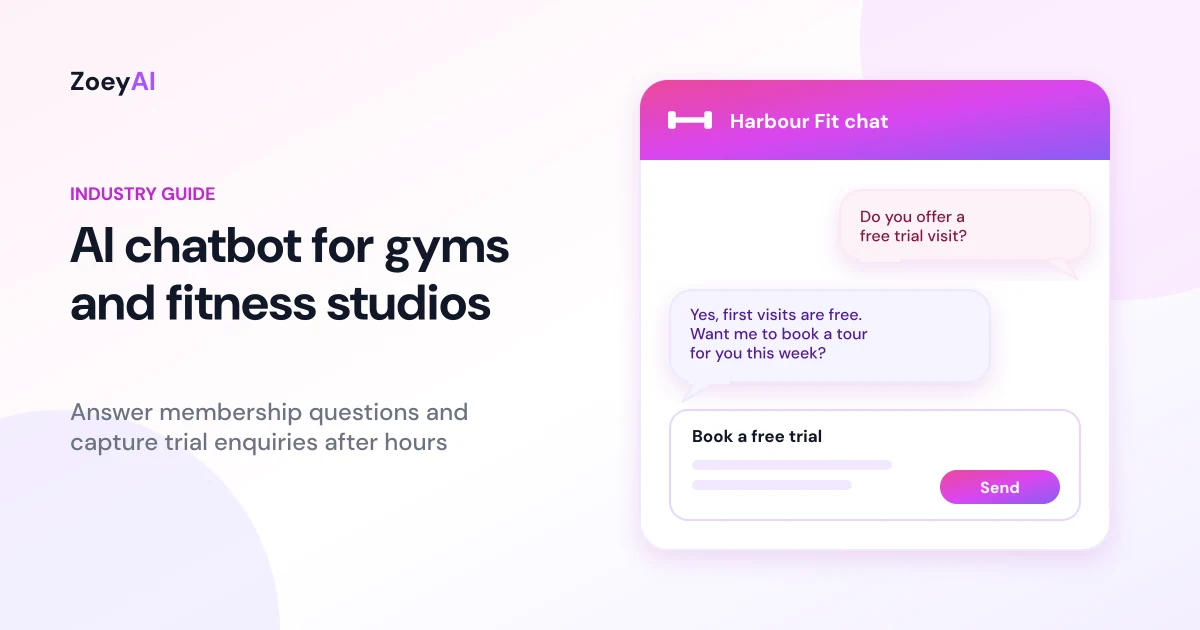
An AI chatbot for gyms and fitness studios sits on your website and answers the membership, class and facility questions that fill your inbox and front desk every day. It captures trial visit requests, class enquiries and membership interest with the details your team needs to follow up, and it passes anything that needs a person to a staff member. Gyms, boutique studios, yoga and pilates studios, personal training businesses and 24-hour facilities all face the same pattern: people research after hours, compare options quickly, and expect a useful reply before they walk through the door.
This guide covers what a chatbot for a gym or fitness studio should and should not do, the enquiries it handles best, what to train it on, the Australian privacy and consumer rules to keep in mind, and how to tell whether it is helping.
What does an AI chatbot for gyms and fitness studios actually do?
Most first contact with a gym or studio is practical rather than personal-training advice. People want to know what memberships you offer, whether you have a free trial, which classes run on which days, what to bring, parking, opening hours and how to cancel or pause. A chatbot trained on your own website and notes can answer those questions straight away, at any hour.
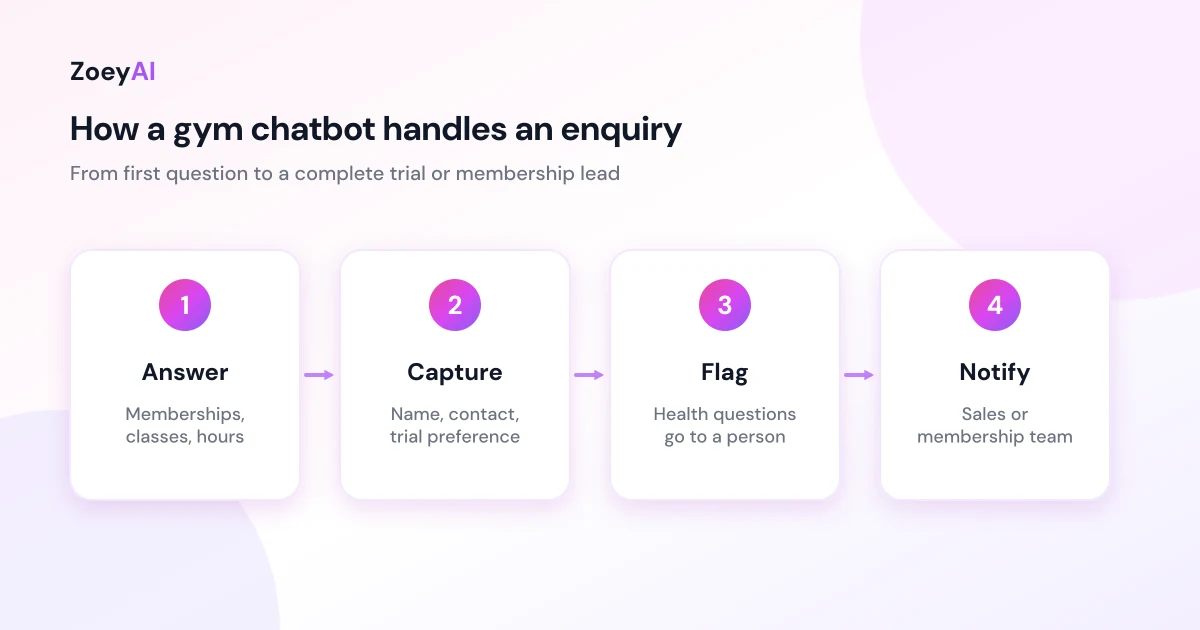
A well-set-up chatbot for a gym or fitness business does four things:
- Answers facility and membership questions. Plans and prices you publish, joining fees, class timetables, age limits, parking, lockers, childcare, guest passes and opening hours.
- Captures trial and membership enquiries. It asks for name, phone number, email, preferred location or class type and when they want to visit, so your team can follow up with context.
- Handles existing-member admin. It can explain how to book a class, where to update payment details, how freezes and cancellations work at your business, and who to contact about an account issue.
- Hands over to a person. When someone wants a tour, a personal training consult or help with a billing problem, a staff member can take over the live conversation from the dashboard, or the chatbot collects details for a call-back.
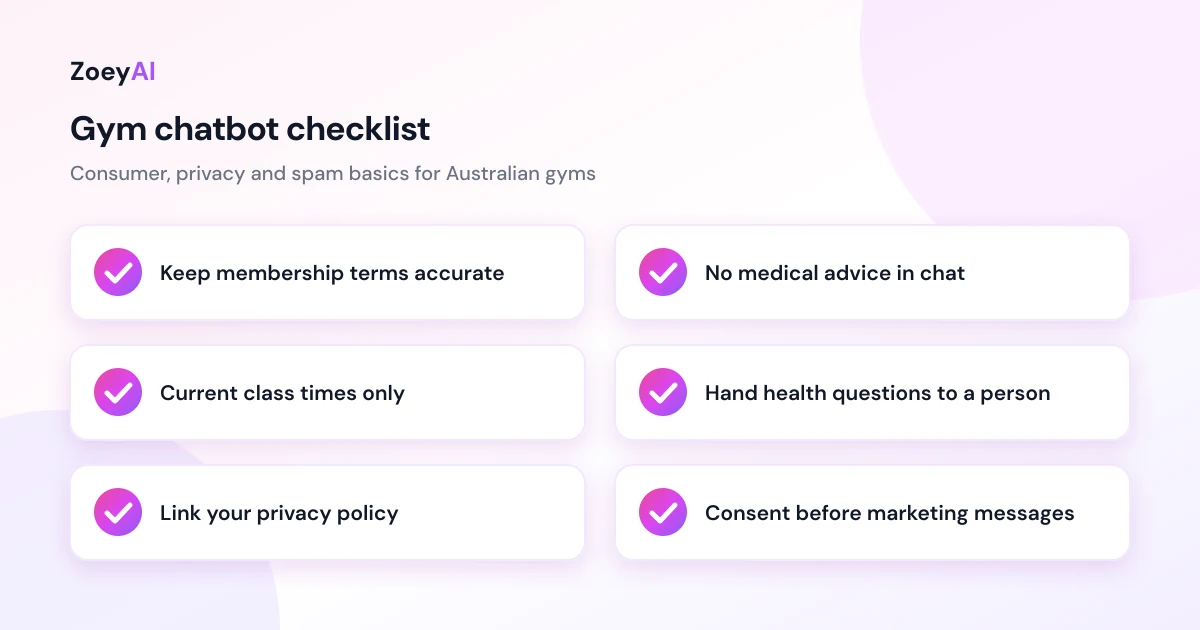
What it should not do is give medical, injury or nutrition advice, invent prices or class times that are not in your training content, or promise outcomes such as guaranteed weight loss. Those questions belong with a qualified trainer, a coach or a health professional, and the chatbot should say so plainly.
Why gyms and studios suit a website chatbot
A few features of fitness businesses make a chatbot worth considering:
- People research after hours. Many prospective members browse gyms in the evening or on weekends, when your sales team is not on the floor.
- Many questions repeat. Membership options, trial visits, class times, what to wear and parking come up again and again.
- Timetables and offers change. A chatbot that is kept up to date can reflect the current class schedule and promotions without waiting for a staff reply.
- Front desk time is limited. Reception staff are busy with check-ins, tours and members. Capturing web enquiries automatically frees them to help people who are already on site.
A chatbot doesn't replace your membership consultants or coaches. It answers website visitors while your team focuses on members and tours.
The enquiries a chatbot handles best
Trial visits and new memberships
This is where most gyms and studios see value. The chatbot can explain your plans, what a trial includes and how joining works, then collect contact details and a preferred visit time. Your team gets a tidy enquiry instead of a vague "please call me" message.
Class and timetable questions
Boutique studios and gyms with group fitness get asked which classes suit beginners, when yoga or HIIT runs, and whether you need to book ahead. These are factual answers your chatbot can give from your training content, if you keep the timetable current.
Facility and access questions
Opening hours, 24-hour access, parking, lockers, showers, age restrictions and guest policies are routine website questions. Answering them in chat reduces emails and missed calls.
Existing-member admin
Members often contact the club to ask how to freeze a membership, change a payment method or book a personal training session. A chatbot can point them to the right process and, if needed, take a message for the membership team.
What to train your chatbot on
The chatbot is only as good as the information you give it. Start with:
- Your membership options and published prices, including joining fees, minimum terms and what each plan includes.
- Trial and intro offers, with clear rules on who is eligible and how to book a visit.
- Class timetable and booking rules, plus which classes suit beginners.
- Locations, hours and access, including 24-hour entry if you offer it, parking and public transport notes.
- Cancellation, freeze and pause policies as you actually apply them, not as marketing copy.
- Personal training and specialty programs, and how people enquire about them.
- Clear limits. Tell the chatbot that it must not give medical, injury or nutrition advice, invent prices or class times, or promise results, and that those questions go to a staff member.
ZoeyAI can scan your existing website to build its knowledge base, and you can add notes and FAQs in the dashboard. Our guide on how to add an AI chatbot to your website walks through installing the widget and training it step by step.
Consumer rules and membership claims
Gym and fitness memberships are a common source of consumer complaints in Australia. State fair trading agencies publish guidance for consumers on gym contracts, cooling-off periods and cancellation rights. NSW Fair Trading's page on gyms, health and fitness centres is one example of the kind of information members look up when they feel stuck in a contract.
Treat your chatbot's answers with the same care as anything else you publish:
- Only state prices, terms and offers that are current. If a promo has ended, remove it from the training content.
- Describe cancellation and freeze rules accurately. Don't soft-pedal minimum terms or fees that apply under your contract.
- Don't overpromise results. Avoid wording that suggests guaranteed weight loss or fitness outcomes.
- Make handover easy. A visitor should always be able to reach a person for a tour, a contract explanation or an account issue.
If you're unsure how a particular answer fits your contract or advertising obligations, check with your lawyer or your state fair trading body before adding it to the chatbot's training.
Health claims, privacy and spam
Fitness businesses often collect information about people's goals, injuries and health. Some of that can be health information under Australian privacy law. The Office of the Australian Information Commissioner explains what counts as health information and how the Australian Privacy Principles apply to organisations covered by the Privacy Act. Some small businesses with an annual turnover of $3 million or less are exempt, but there are exceptions, so check the OAIC guidance or get advice on whether your business is covered. Following the principles is good practice either way.
The Australian Government also publishes general information on physical activity and exercise. That is useful background for your members, but it is not a substitute for individual medical advice, and your chatbot should not try to provide one.
Some practical steps:
- Tell the chatbot not to ask for detailed medical history, injury diagnoses or medication lists, and to direct people with health concerns to a qualified professional or to your onboarding questionnaire if you use one.
- Link your privacy policy from the chat window.
- Limit who can see chat transcripts in your team, and remove access when staff leave.
- Ask before adding people to marketing lists. Someone who asked about a trial hasn't agreed to your SMS or email campaigns. The ACMA's guidance on avoiding spam explains the consent rules for commercial emails and texts.
Getting enquiries to the right person
In a multi-site gym group or a studio with sales and coaching teams, the enquiry should land with the person who can help. Set up the chatbot to ask a simple routing question, such as whether the person wants a membership trial, a class pack, personal training or help with an existing account, and include that in the captured enquiry.
During business hours, staff can take over a conversation when a prospective member is ready to book a tour. Outside hours, the chatbot collects details and explains when the club will be in touch. Our comparison of AI chatbot vs live chat explains where each fits.
How to measure whether it is working
Run the chatbot for four to eight weeks and track:
- Conversations started and how many became a captured enquiry.
- Trial and membership enquiries by type, so you can see where demand is coming from.
- Enquiries outside business hours, which shows what you would otherwise have answered late.
- Questions it couldn't answer. Add these to your training content, especially when class times or offers change.
- Enquiries that became trials or members, which matters more than raw chat numbers.
Your own results will tell you more than any industry average. Our AI chatbot for lead generation guide goes deeper on qualifying questions and follow-up.
What does it cost?
ZoeyAI has a free Starter plan for live chat without AI. AI plans start at $29 a month incl. GST on Basic (100 conversations a month) and $79 a month incl. GST on Pro (250 conversations a month, up to 5 team seats). Annual billing on Basic and Pro works out cheaper per month, and Enterprise pricing is available on request. Basic and Pro both start with a 7-day free trial. See the full comparison on our pricing section.
Frequently asked questions
Can an AI chatbot give fitness or nutrition advice?
It shouldn't. A chatbot can explain your classes, memberships and facilities, but questions about injuries, medical conditions, diet plans or personal training programs need a qualified person. Train it to say that clearly and offer a call-back or a live handover.
Will it work for a boutique studio as well as a large gym?
Yes. Small studios often benefit most, because the owner or a small team can't answer every web enquiry while coaching classes. The chatbot answers common questions and collects trial details so you can reply when you have time.
Can it book classes or process memberships?
That depends on your setup. ZoeyAI's chatbot captures enquiries and can hand over to a person; it does not replace your membership or class booking software. Use it to collect interest and route people to the right booking flow or staff member.
Is it safe when people mention injuries or health goals?
Set the chatbot up so it doesn't collect detailed medical information in chat, and point people with health concerns to a qualified professional or your usual onboarding process. Collect only what you need to follow up, link your privacy policy and limit who can see transcripts.
How long does it take to set up?
If your website already lists memberships, class times and FAQs, you can scan it, review what the chatbot learned, add notes about your limits and install the widget in an afternoon. Then test it with real member questions and update the training when your timetable or offers change.
Keep reading
"AI Chatbot Privacy Australia: What the Privacy Act and APPs Mean for Your Business"
AI chatbot privacy Australia guide covering the Privacy Act, the Australian Privacy Principles, commercially available AI products, data security, spam consent and practical steps for website chatbots.
"Intercom Alternative for Small Business: How to Choose Without Overpaying"
Looking for an Intercom alternative for small business? Compare what Intercom is built for with what SMBs usually need from an AI chatbot, lead capture and human handover — with Australian pricing and privacy notes.